
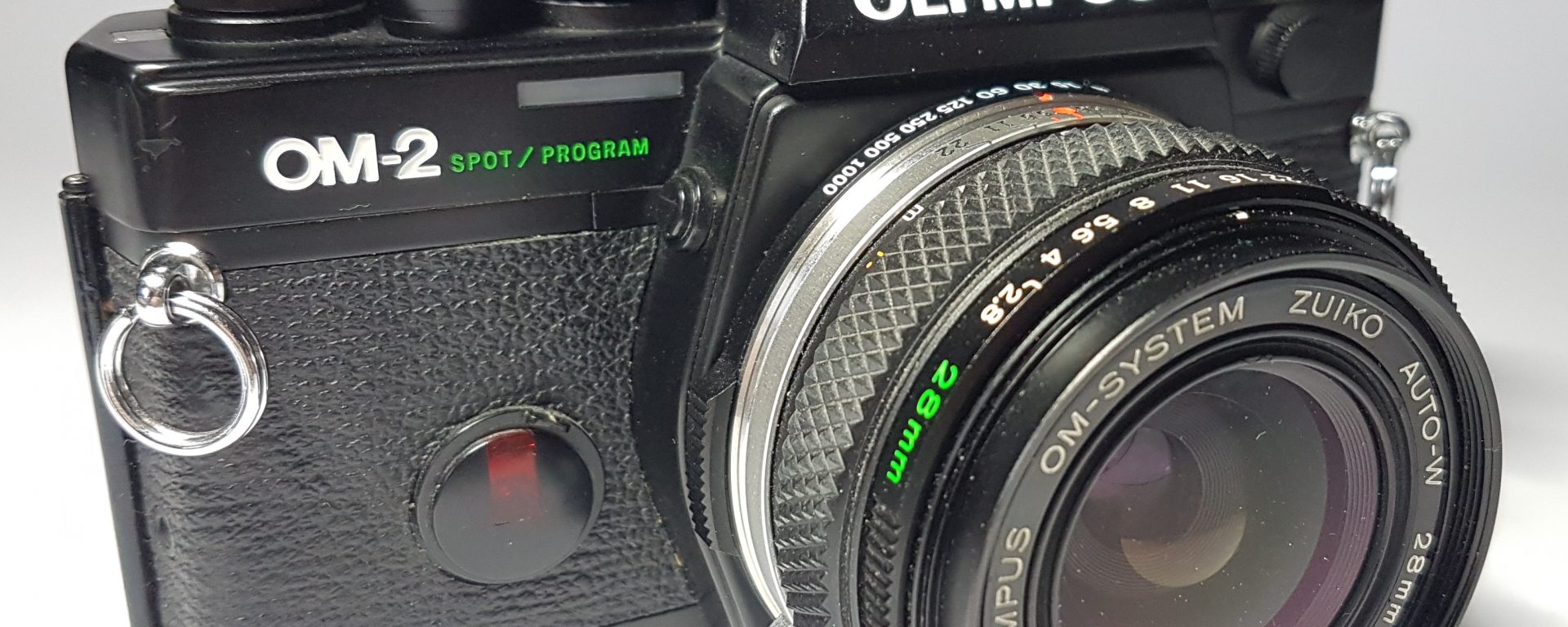
At Katie’s cameras we work with a wide range of different types of cameras. I will be producing a range of buyer’s guides for different categories of cameras and accessories. We are interested in cameras which are to be used and not simply ornaments, very beautiful though many of them are. So, your first big decision is Film or Digital?
Digital: In an era when mobile phones have cameras which are sufficiently powerful that feature films can be made using them, it begs the question: what is the point of a digital camera? Well firstly, compared to a £1000 phone, a fantastic high spec camera is often amazingly cheap. But mainly, the availability of an array of features with dials and switches, and the balance and feel of a camera offer significant advantages over most phones, which are just the wrong shape for good photography. The second main advantage is optical zoom. Only very few phones have any optical zoom at all and you must remember that x2 zoom halves the resolution. That is fine, but when x10 gets down to one tenth the resolution, that is not fine. A ten times zoom is common in very compact digitals that are old enough that we stock them regularly. Bridge cameras have zooms commonly of 20x, some up to 40x. You can catch the pilot waving as a plane goes past!

A Panasonic Lumix FZ-18 Digital Bridge Camera. 8.1MP with an 18x Leica Zoom Lens
So, generally the five principal categories are compacts (standard small cameras with zooms commonly x3 to x5) with often very small and slim cases. Then there are the superzooms which are compacts but with much longer zooms (x10+) in cases not much larger. Then, there are bridge cameras, which are like small SLRs, with proper viewfinders, excellent handling and long zooms (x10 to x50). Next are the mirrorless interchangeable lens cameras. These have electronic viewfinders (or none), but otherwise are small versions with the look and feel of the final category; Digital SLRs.
Film: Film is making a serious comeback. The fact that Snappy Snaps still maintains a large network of high street shops selling and developing different types of film (35mm, 120, Instax, Polaroid) means that film is easy. There are cheaper services online, but the important thing is that getting films and them developed is widely available.
The best argument for film is that it slows you down and it doesn’t bog you down with too many features! And really, a great photograph is about seeing an image which is exciting and capturing it. Blasting away on your phone taking 1000s of uninteresting pictures is the problem that moves people back into film photography.
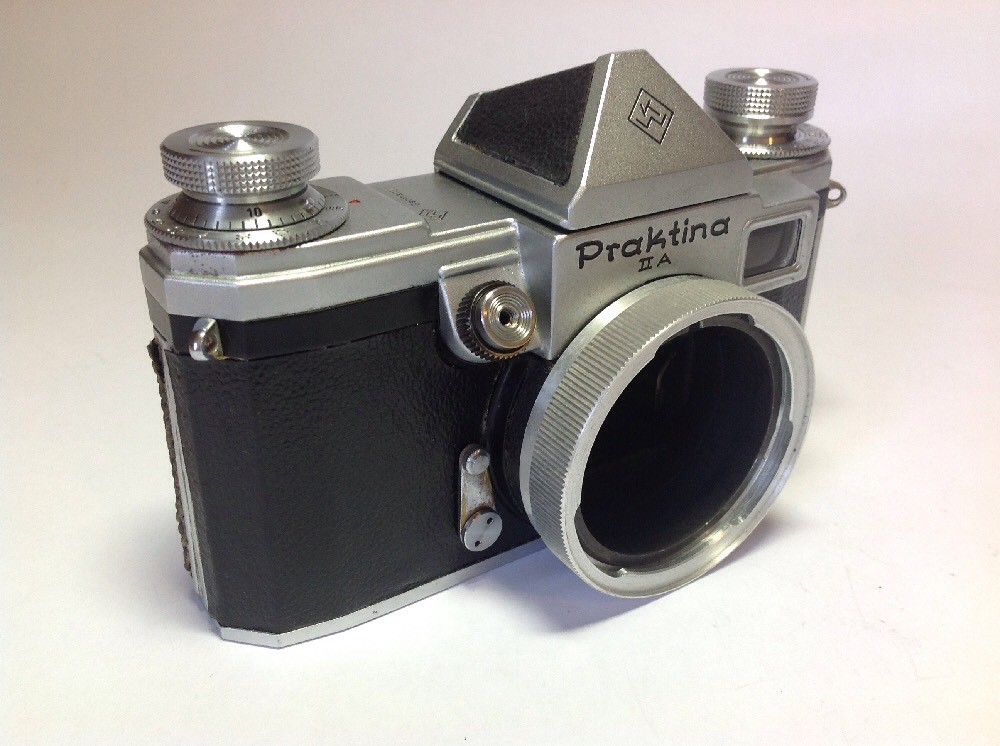
A 1950s East German Praktina IIA SLR film camera. This was the first system camera with interchangeable components for professionals.
So, those four film types defines a first choice. Instant versus developing. Fuji Instax has been a massive success for the fashion conscious and they are great fun. We occassionally get Instax cameras in and Logan still runs films through the ones we kept. Polaroid was kept alive by the impossible project, who bought up the last Polaroid film factory. They have now bought the name of Polaroid Originals and kept the rainbow logo. So, Polaroid proper is back. They make film for only more recent cameras of the SX-70, 600, Impulse and 1-step type cameras. They even make their own camera. Truth be told we have decided we cannot keep up with them for now. The film is frighteningly expensive and despite lots of practice, we cannot get reliable pictures. But, they have a great following.
120 Film is used in medium format cameras. A lot of old bellows type cameras can still be used with 120 film (but by no means all of them). All Twin Lens Reflex (epitomised by the ubiquitous Rolleiflex) run on 120 film as do the large cameras that all wedding photographer use (Hasselblad if they are really flash!). Far and away the most common are cameras using 35mm film. This comes in rolls of 24 or 36 exposures and is easy to load, use and take for developing. Major categories of 35mm camera include; fixed lens compact cameras (the Olympus Trip and Konica C35 are the defining examples), fixed lens rangefinders (generally larger with bigger lenses like the Yashica Electro 35), Interchangeable lens rangefinders (Leica and Contax and all of the copies theoreof), Single Lens Reflex (SLR) cameras (classics include the Olympus OM1 and OM10, The Nikon F, Canon AE-1 and so on and so on) and half frame compacts (which give twice as many pictures for the same roll of film, notably the Canon Demi and Olympus Pen series).
That concludes my overview. There are many other categories of camera I haven’t even mentioned, but I hope this provides a general context to the decision making process. I will be making much more detailed guides to each of the categories I have outlined, as time goes on. Please go to our EBay store and see what we have in, like us and you’ll hear when new stuff is listed. Then you can start, continue or develop your journey into the wonderful world of photography.